
 EN
EN



Understanding how to customize reading lights for different reader needs is essential for creating optimal reading experiences across various scenarios and user preferences. The ability to customize reading lights involves adjusting multiple parameters including brightness levels, color temperature, beam focus, positioning flexibility, and control mechanisms to match specific reading requirements, environmental conditions, and individual comfort preferences.
Modern reading light customization extends far beyond simple on-off functionality, encompassing sophisticated adjustment capabilities that address diverse reader demographics, reading materials, time-of-day preferences, and ergonomic considerations. Effective customization requires understanding the relationship between light characteristics and reading performance, eye comfort, and long-term visual health across different age groups and reading habits.
Understanding Reader-Specific Lighting Requirements
Age-Related Vision Considerations
Customizing reading lights requires careful attention to age-related vision changes that significantly impact lighting needs across different life stages. Younger readers typically require lower light levels and can comfortably read with cooler color temperatures, while older readers often need substantially brighter illumination due to reduced pupil dilation capacity and decreased retinal sensitivity. When you customize reading lights for mature readers, increasing brightness levels by 200-300% compared to younger user requirements often becomes necessary to achieve comparable reading comfort and text clarity.
The ability to customize reading lights for presbyopic users involves incorporating adjustable magnification features alongside variable brightness controls, as declining near-focus accommodation affects reading distance preferences. Optimal customization also addresses increased sensitivity to glare and contrast requirements, necessitating diffused light distribution patterns and adjustable beam width controls that minimize harsh shadows while providing adequate task illumination.
Professional lighting designers recommend implementing graduated brightness adjustment systems when developing solutions to customize reading lights for multi-generational households, allowing seamless transitions between comfort levels without requiring complex technical knowledge from users. This approach ensures that family members of different ages can quickly adapt the same lighting fixture to their specific visual requirements.
Reading Material Optimization
Different reading materials demand distinct lighting approaches when you customize reading lights for optimal performance and user satisfaction. Printed books with matte paper surfaces typically require broader, more diffused illumination to prevent harsh reflections, while glossy magazine pages need carefully angled light sources to minimize glare without sacrificing readability. The process to customize reading lights for digital device reading involves warmer color temperatures and reduced blue light emission to minimize eye strain during extended screen interaction periods.
Technical documentation and detailed reference materials often contain smaller fonts and dense information layouts that benefit from higher contrast lighting when you customize reading lights for professional applications. These scenarios require precise beam focus capabilities and adjustable intensity controls that enable users to increase illumination for challenging passages while maintaining comfortable ambient lighting levels for general reading.
Textbook reading and study applications present unique challenges when attempting to customize reading lights effectively, as these activities often involve extended reading sessions with frequent note-taking and reference switching. Optimal customization includes dual-zone lighting capabilities that illuminate both the primary reading surface and secondary work areas without creating conflicting shadows or brightness imbalances.
Brightness and Color Temperature Adjustment Methods
Dynamic Brightness Control Systems
Implementing effective brightness control represents a fundamental aspect of how to customize reading lights for diverse user needs and environmental conditions. Advanced customization systems incorporate continuous dimming capabilities rather than stepped brightness levels, providing users with precise control over illumination intensity to match their specific comfort requirements and task demands. The ability to customize reading lights with memory functions enables users to store preferred brightness settings for different reading scenarios and times of day.
Professional-grade brightness customization incorporates ambient light sensors that automatically adjust output levels based on surrounding illumination conditions, ensuring consistent perceived brightness regardless of external lighting changes. This intelligent approach to customize reading lights reduces the need for manual adjustments while maintaining optimal contrast ratios between the reading surface and surrounding environment.
When designing systems to customize reading lights for professional environments, incorporating override capabilities alongside automatic adjustment features provides users with ultimate control while benefiting from intelligent assistance during routine use. This hybrid approach accommodates both preference-driven manual control and efficiency-focused automated operation modes.
Color Temperature Customization Strategies
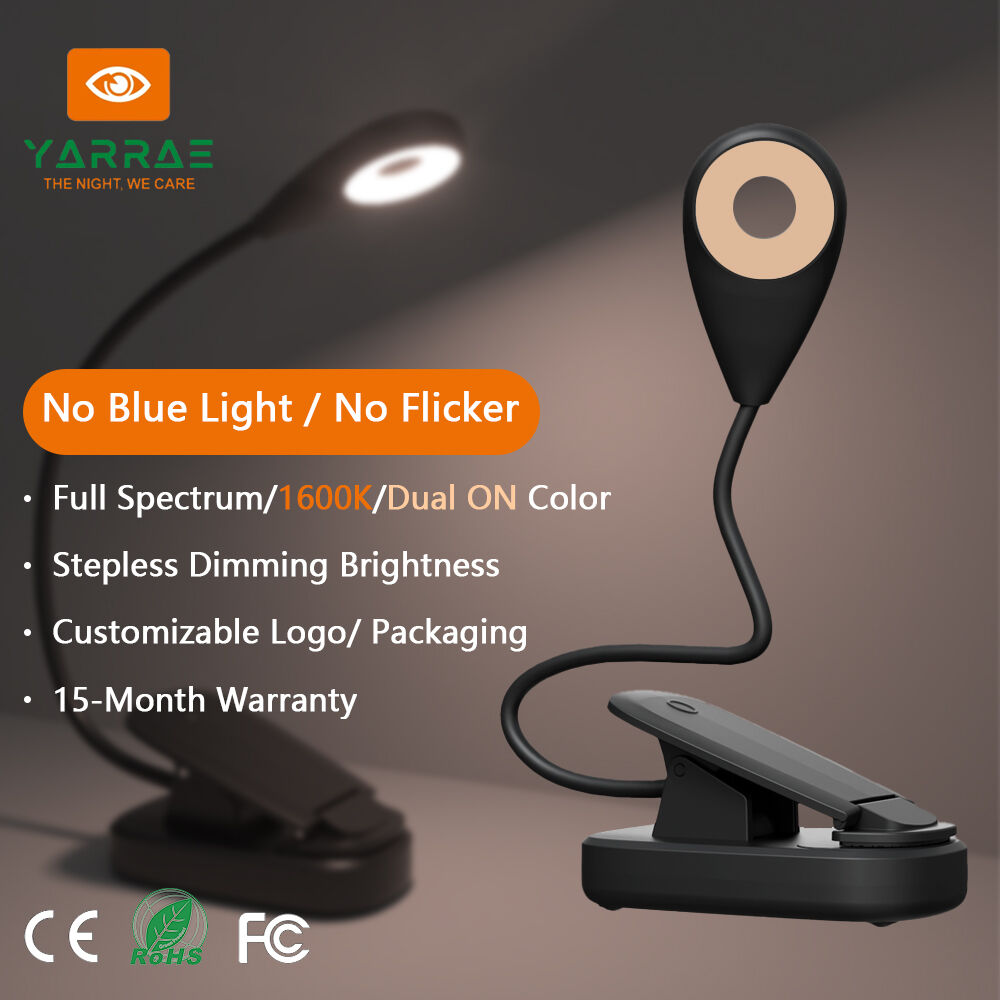
Color temperature adjustment capabilities represent crucial elements when learning to customize reading lights for different times of day and reading durations. Cool white light in the 5000K-6500K range enhances alertness and text contrast during daytime reading sessions, while warmer temperatures between 2700K-3000K promote relaxation and reduce circadian rhythm disruption during evening reading periods. The flexibility to customize reading lights with seamless color temperature transitions enables users to maintain consistent comfort levels as natural lighting conditions change throughout the day.
Advanced color temperature customization includes programmable scheduling features that automatically shift from cool to warm tones based on preset times or user activity patterns. This sophisticated approach to customize reading lights supports healthy sleep patterns by gradually reducing blue light exposure during pre-bedtime reading sessions while maintaining sufficient illumination for comfortable text perception.
Professional applications often require the ability to customize reading lights with precise color rendering capabilities that accurately display printed colors and detailed graphics. Full spectrum LED technologies enable customization across the complete visible light range, ensuring that technical documents, artwork, and color-coded materials appear with accurate color representation under various temperature settings.
Positioning and Directional Flexibility Features
Articulation and Mounting Solutions
Mechanical flexibility represents a critical component when developing effective methods to customize reading lights for diverse user preferences and workspace configurations. Multi-axis articulation systems enable users to position light sources at optimal angles relative to their reading materials, eliminating shadows and reflections while maintaining comfortable viewing angles. The ability to customize reading lights with flexible positioning ensures compatibility with various seating arrangements, reading distances, and material orientations without requiring furniture modifications or workspace reorganization.
Professional-grade positioning systems incorporate smooth adjustment mechanisms with sufficient tension control to maintain selected positions without gradual drift or instability. When you customize reading lights with quality articulation components, users can make fine adjustments during extended reading sessions to accommodate changing postures and comfort requirements without interrupting their reading flow.
Magnetic and clamp-based mounting solutions enhance the versatility of efforts to customize reading lights for portable applications and temporary workspace setups. These attachment methods enable users to quickly reposition lighting fixtures across different surfaces and materials while maintaining stable, vibration-resistant connections that support precise light placement requirements.
Beam Width and Focus Control
Adjustable beam characteristics provide essential customization capabilities when optimizing reading lights for different material sizes and reading styles. The ability to customize reading lights with variable focus controls enables users to concentrate illumination on specific text areas during detailed reading or expand coverage for broader material layouts during general reading sessions. Zoom-style optical systems offer continuous adjustment between spot and flood beam patterns, accommodating everything from single-column text to large format publications.
Professional applications often benefit from the ability to customize reading lights with asymmetric beam patterns that match typical reading material proportions and user eye movement patterns. Rectangular light distribution optimizes illumination efficiency while reducing light spillage into surrounding areas that might disturb nearby individuals or create visual distractions during focused reading sessions.
Advanced beam control systems incorporate edge feathering capabilities that create smooth transitions between illuminated and non-illuminated areas when you customize reading lights for shared spaces. This sophisticated light distribution prevents harsh brightness boundaries that can cause eye strain during extended reading periods while maintaining adequate task illumination levels.
Control Interface and User Experience Design
Intuitive Control Mechanisms
User interface design significantly impacts the practical effectiveness of efforts to customize reading lights for diverse user populations and application scenarios. Touch-sensitive controls provide silent operation capabilities that prevent disruption in quiet environments like libraries and bedrooms, while tactile button interfaces offer reliable operation for users who prefer physical feedback during adjustment activities. The most successful approaches to customize reading lights incorporate multiple control methods that accommodate different user preferences and accessibility requirements.
Wireless control capabilities expand customization options by enabling remote adjustment without interrupting reading positions or requiring physical access to the lighting fixture. Mobile application interfaces allow users to customize reading lights with precise parameter control, preset storage, and scheduling features that enhance convenience and functionality beyond traditional hardware controls.
Professional environments often require the ability to customize reading lights with group control capabilities that enable coordinated lighting adjustments across multiple fixtures or user workstations. Centralized control systems support consistent lighting standards while maintaining individual customization capabilities for specific user needs and preferences.
Memory and Preset Functionality
Programmable memory systems enhance user experience by storing personalized settings that eliminate repetitive adjustment procedures when attempting to customize reading lights for recurring scenarios. Multi-user memory banks enable shared lighting fixtures to quickly switch between different user preferences without requiring manual reconfiguration for brightness, color temperature, and positioning parameters.
Advanced preset functionality incorporates scene-based programming that automatically coordinates multiple lighting parameters when you customize reading lights for specific activities such as casual reading, detailed study, or technical reference work. These integrated approaches reduce the complexity of achieving optimal lighting conditions while ensuring consistent results across different usage sessions.
Time-based preset activation enables automatic customization of reading lights based on daily schedules and usage patterns, supporting both convenience and healthy lighting practices without requiring constant user intervention. Smart learning algorithms can analyze usage patterns and suggest optimal preset configurations that improve reading comfort and efficiency over time.
Power Management and Portability Considerations
Battery Life Optimization
Power efficiency considerations play crucial roles when developing portable solutions to customize reading lights for mobile and remote reading applications. Advanced LED technologies combined with intelligent power management systems enable extended operation periods while maintaining consistent light output across the complete battery discharge cycle. The ability to customize reading lights with multiple power modes allows users to balance performance requirements against battery life expectations based on their specific usage scenarios and access to charging facilities.
Variable power consumption profiles enable users to customize reading lights with economy modes that extend operation time during extended reading sessions where maximum brightness may not be essential. These efficiency-focused customization options often reduce power consumption by 40-60% while maintaining adequate illumination for comfortable reading under most conditions.
USB charging compatibility enhances the practical utility of portable reading lights by enabling power replenishment from common devices and power sources. When you customize reading lights with universal charging capabilities, users gain flexibility to maintain power availability during travel and extended away-from-home reading activities without requiring specialized charging equipment or power adapters.
Compact Design Integration
Size and weight optimization represent important factors when developing portable systems to customize reading lights for travel and mobile applications. Folding mechanisms and telescopic components enable compact storage configurations while maintaining full functionality when deployed for use. The most effective approaches to customize reading lights for portability incorporate lightweight materials and efficient mechanical designs that minimize bulk without compromising structural integrity or adjustment capabilities.
Integrated clip and mounting systems eliminate the need for separate attachment hardware when you customize reading lights for temporary installation scenarios. These built-in solutions enhance convenience while reducing the risk of losing essential components during transport and storage activities.
Modular component designs enable users to customize reading lights with different feature combinations based on specific trip requirements and space constraints. Interchangeable elements such as different mounting attachments, battery modules, and control interfaces provide customization flexibility while maintaining compatibility with a common core lighting system.
FAQ
What are the most important factors to consider when customizing reading lights for elderly users?
When customizing reading lights for elderly users, prioritize significantly higher brightness levels (typically 200-300% more than younger users need), adjustable color temperature ranging from 3000K-4000K for optimal contrast, minimal glare through proper diffusion, and easy-to-use controls with large, clearly marked adjustment mechanisms. Additionally, consider positioning flexibility to accommodate various reading distances and potential mobility limitations, while ensuring stable mounting that won't require frequent readjustment.
How do I customize reading lights for both print and digital reading materials?
To customize reading lights for both print and digital materials, implement dual-mode color temperature settings with cooler temperatures (4000K-5000K) for print materials to enhance contrast and warmer settings (2700K-3000K) for digital screens to reduce blue light exposure. Include adjustable brightness controls with memory presets for each reading type, and ensure the light can be positioned to minimize screen reflections while providing adequate illumination for printed pages without creating harsh shadows.
What beam angle works best when customizing reading lights for different reading distances?
Optimal beam angles when customizing reading lights vary from narrow 15-30 degree spots for focused close reading to broader 45-60 degree floods for larger materials or shared reading spaces. Variable beam width capability provides the most flexibility, allowing users to concentrate light for detailed work or expand coverage for newspapers and magazines. Consider asymmetric beam patterns that match typical reading material proportions for enhanced efficiency and reduced light spillage.
How can I customize reading lights to minimize eye strain during extended reading sessions?
To customize reading lights for minimal eye strain, implement flicker-free LED drivers operating at high frequencies above 1000Hz, provide smooth dimming capabilities to match ambient lighting levels, and include warm-up sequences that gradually increase brightness rather than sudden illumination changes. Incorporate diffusion elements to create even light distribution without hotspots, enable color temperature adjustment to reduce blue light during evening reading, and ensure the light source is positioned to eliminate shadows and reflections on reading surfaces.
Table of Contents
- Understanding Reader-Specific Lighting Requirements
- Brightness and Color Temperature Adjustment Methods
- Positioning and Directional Flexibility Features
- Control Interface and User Experience Design
- Power Management and Portability Considerations
-
FAQ
- What are the most important factors to consider when customizing reading lights for elderly users?
- How do I customize reading lights for both print and digital reading materials?
- What beam angle works best when customizing reading lights for different reading distances?
- How can I customize reading lights to minimize eye strain during extended reading sessions?