×
The way a home feels can change completely after sunset. A living room that feels bright and energetic during the day may seem less inviting under strong overhead lighting at night. A bedroom that looks beautiful in daylight can also feel surprisingly uncomfortable when a single ceiling lamp becomes its main source of illumination.
Creating a cozy evening atmosphere does not necessarily require expensive furniture, a complete interior makeover, or complicated smart lighting systems. Sometimes, changing how light is distributed around a room can make the biggest difference.
A softly illuminated corner, a warm bedside lamp, or a gentle glow along a hallway can transform the character of an everyday space.
The key is understanding how light color, brightness, placement, and different lighting layers work together.
In this guide, we will explore practical evening lighting ideas for different areas of the home, helping you create a warm and welcoming environment without sacrificing everyday comfort or functionality.
One of the most common mistakes in home lighting is relying on a single bright overhead fixture to illuminate an entire room.
While ceiling lights are practical for cleaning, working, and daily household activities, they are not always ideal for creating a comfortable evening atmosphere.
Instead of illuminating every corner equally, try introducing several smaller sources of light.
Interior lighting is commonly organized into three layers:
Ambient lighting provides the general illumination needed to move comfortably around a space.
During the evening, this might come from a dimmed ceiling fixture, a shaded floor lamp, or a table lamp that spreads light gently across nearby surfaces.
The goal is not necessarily to keep the room brightly illuminated. It is to provide enough background visibility while avoiding unnecessarily intense lighting.
Task lighting supports specific activities, such as reading, writing, preparing food, or working on a hobby.
A reading lamp beside an armchair is a simple example.
Rather than increasing the brightness of the entire room, a focused lamp directs illumination toward the area where it is needed.
This allows the surrounding space to remain softer and more relaxed.

Accent lighting highlights smaller areas or decorative elements.
A lamp placed on a sideboard, a subtle wall glow, or a compact light near a bookshelf can make a room feel more layered and visually interesting.
Accent lights do not always need to be especially bright. Their purpose is often to create contrast, depth, and a sense of atmosphere.
A practical tip: Start with one comfortable ambient source, add a task light where necessary, and use a small accent light only if the space feels like it needs something extra.
You may find that two thoughtfully positioned lamps create a more inviting effect than several brighter fixtures.
The living room is often where evening routines begin.
After work, it may become a place for conversation, watching television, listening to music, or simply relaxing on the sofa.
The lighting should be flexible enough to support these activities without making the room feel overly bright.
Try turning off the main ceiling light and switching on a floor lamp or a table lamp beside the sofa.
Choose a shade or diffuser that helps soften direct glare. A lamp facing a nearby wall can also create a gentle reflected glow.
Warm white lighting around 2700K is a familiar starting point for many living rooms, providing a welcoming appearance while maintaining comfortable visibility.
For a more subdued atmosphere later in the evening, an additional low-brightness amber light can bring extra warmth to a corner of the room.

A small table lamp on a side table can become a subtle visual feature.
Try placing it beside a stack of books, a ceramic vase, or a simple decorative object.
Leave enough space around the lamp so that the light can spread naturally without being blocked.
Bookshelves and sideboards are also useful locations for smaller accent lights.
The aim is not to illuminate every decorative item. Allow some areas to remain softly shadowed, creating a more natural balance between light and darkness.
Watching television in a completely dark room can create a strong contrast between the bright screen and its surroundings.
A gentle light beside or behind the television can help soften that contrast.
Position the lamp so it does not reflect directly onto the screen or shine into your eyes.
A low-brightness, indirect light is usually more useful here than a decorative lamp with a highly exposed light source.
Evening setup idea: Combine one shaded floor lamp near the sofa with a compact ambient lamp on a side table. Keep the central ceiling lighting off or dimmed whenever the activity allows.
A quiet reading corner can be one of the most enjoyable spaces in a home.
It does not need to be large. A comfortable chair, a small side table, and a carefully positioned reading lamp may be enough.
However, reading areas require a slightly different lighting approach from decorative spaces.
Reading requires enough light to distinguish letters clearly.
A lamp that is too dim may make reading uncomfortable, even if the overall atmosphere looks attractive.
Rather than illuminating the entire room, choose a reading lamp that directs light onto the book or reading surface.
Adjustable lamp heads and flexible gooseneck designs can be particularly useful because they allow you to control the direction of the light.
If you prefer reading in bed, a clip-on book light can offer localized illumination without requiring a brighter bedside lamp.
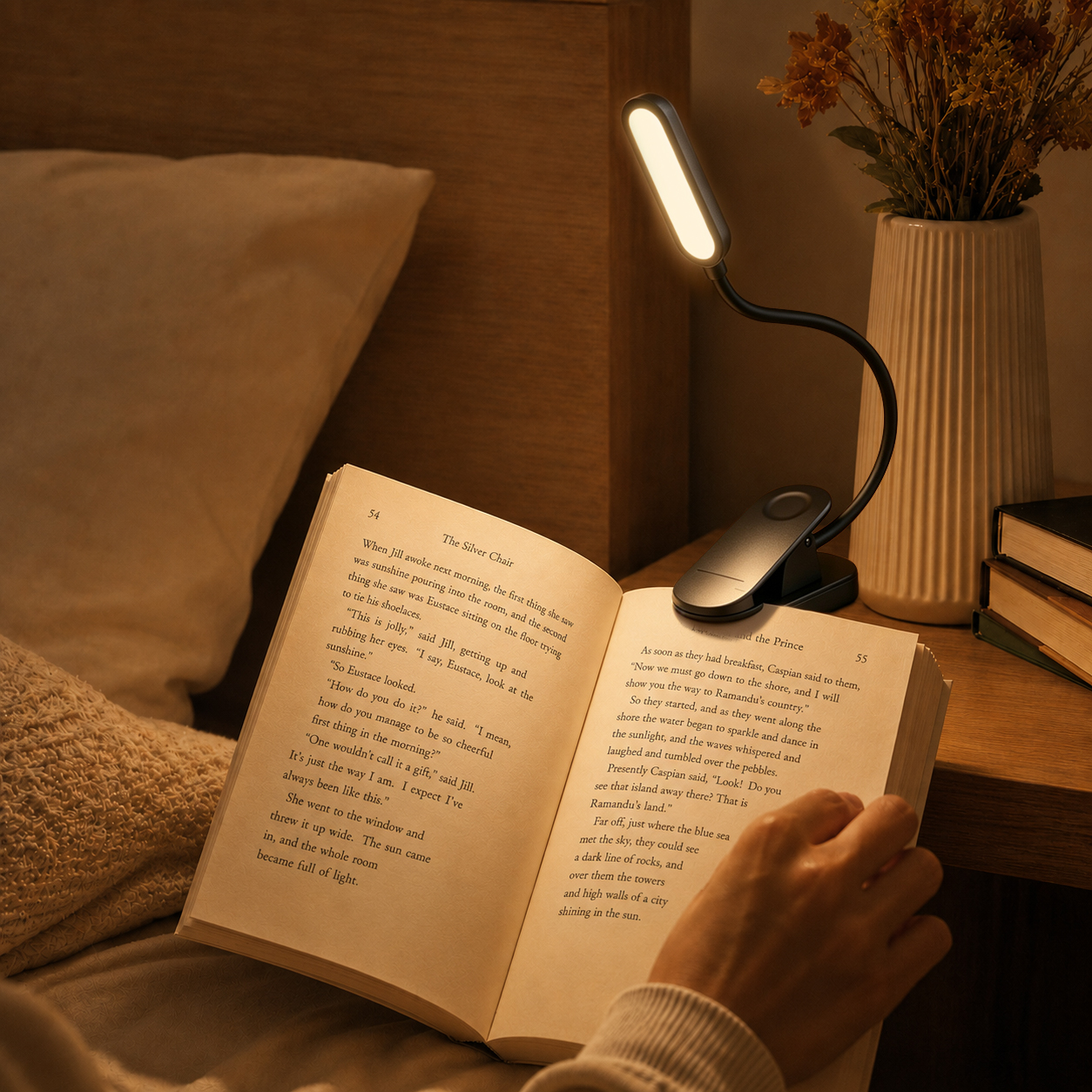
Warm white light is a practical option for evening reading.
Some readers also enjoy deeper amber tones, particularly during their final reading session before bedtime.
For example, a 1600K amber reading light produces a much warmer appearance than a conventional white lamp.
However, comfort depends on more than color alone. Light distribution, brightness, page contrast, and personal preference all play a role.
Very dim red lighting may create an attractive nighttime atmosphere, but it is generally less practical for reading detailed text or accurately recognizing colors.
Position the lamp so its light reaches the pages without shining directly into your eyes.
Avoid highly reflective surfaces around your reading area, and adjust the lamp whenever you change your sitting position.
A comfortable reading setup should help you focus on the book rather than the light source itself.
For more flexible arrangements, explore different styles of LED book lights designed for localized reading illumination.
Bedrooms benefit from lighting that can gradually transition from everyday activities to a quieter nighttime atmosphere.
A bright ceiling lamp may be useful while organizing clothes or cleaning the room, but it is rarely necessary throughout the entire evening.
A bedside lamp with adjustable brightness allows you to reduce illumination as the evening progresses.
Place the lamp where it is easy to reach and where its illuminated surface will not shine directly toward your eyes while lying down.
Lamps with diffused lighting surfaces can help create a gentler appearance than exposed LED points.
For bedside relaxation, some people prefer very warm light, including deep amber tones around 1600K.
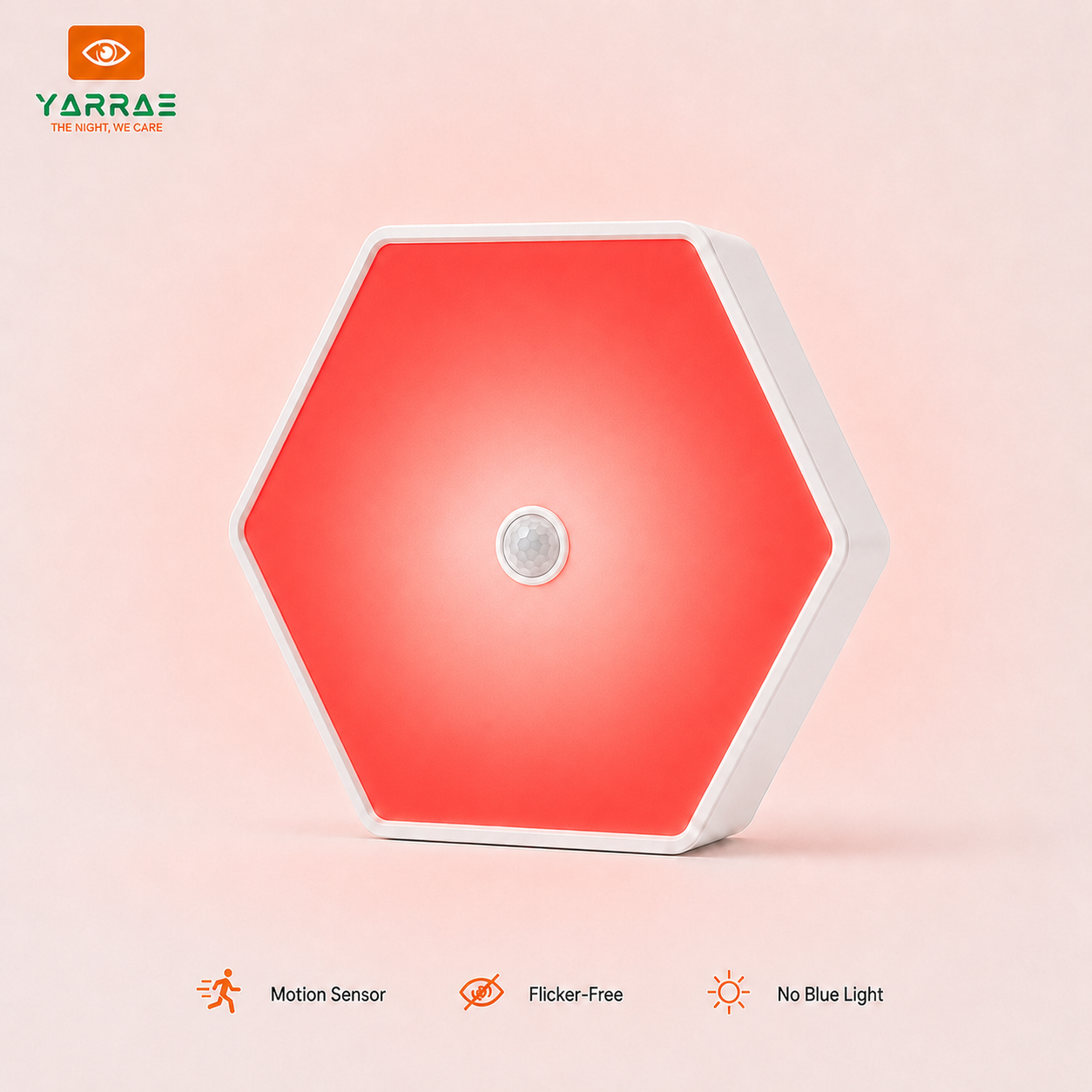
A low-intensity red light can also be used as a decorative or navigation light when only minimal illumination is needed.
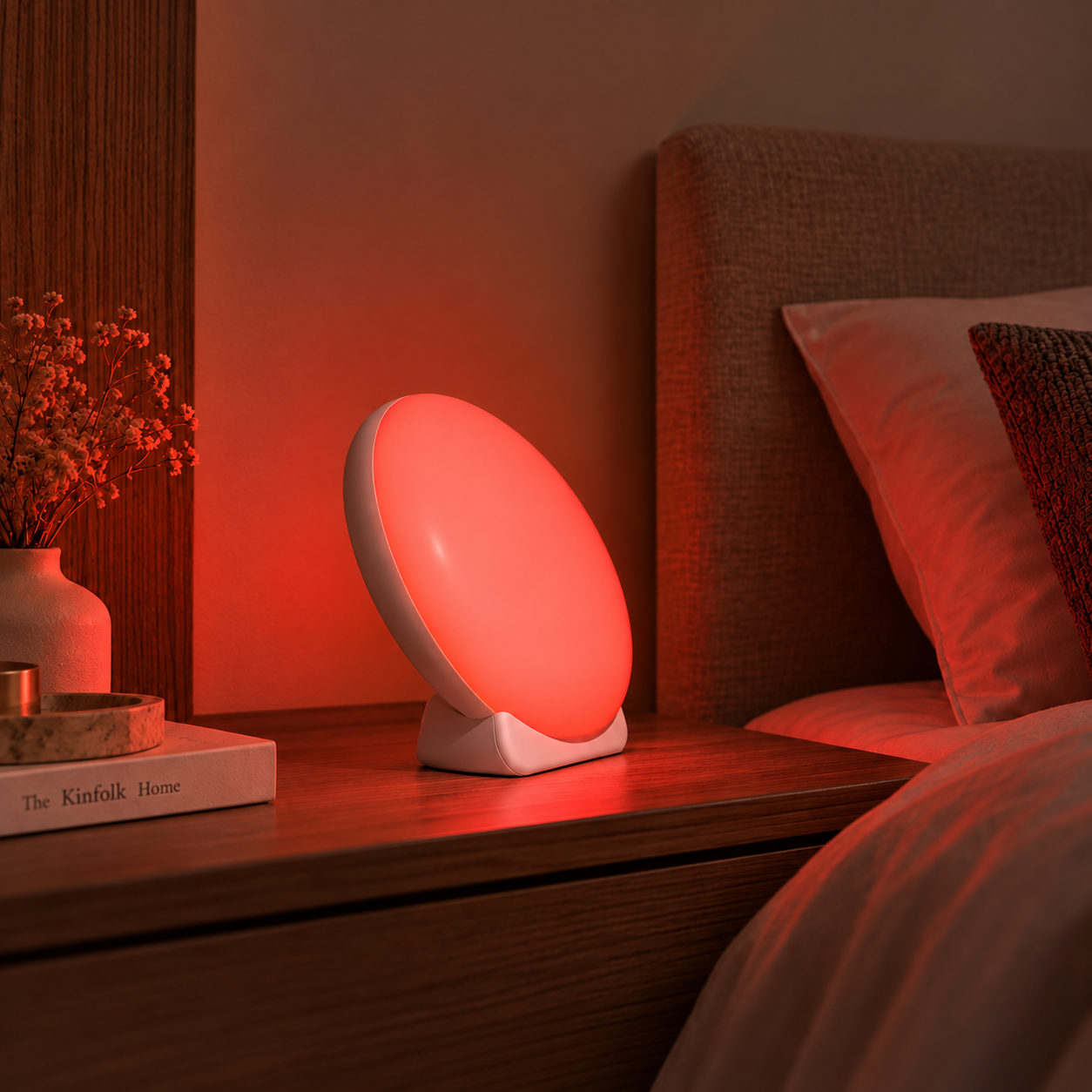
Instead of moving directly from bright white lighting to complete darkness, try adjusting the room in stages.
Earlier in the evening, use enough light for getting ready, reading, or organizing belongings.
As bedtime approaches, reduce unnecessary lighting and switch to lower, warmer sources where appropriate.
Light exposure in the evening can influence circadian physiology, but the effect depends on multiple factors, including intensity, spectrum, duration, and timing. Color temperature by itself does not determine whether a lamp is suitable for sleep.
International lighting guidance emphasizes matching light exposure to the time of day while maintaining adequate visibility and safety.
For most people, a dark sleeping environment is preferable to leaving a bright lamp on throughout the night.
If a night light is needed, choose a low-brightness option and position it away from direct eye level.
A bedside lamp with a timer can also be convenient for people who enjoy reading or relaxing with soft light before sleep.
The objective is simple: provide light when it is useful, then reduce it when it is no longer necessary.
Cozy evening lighting is not limited to bedrooms and living rooms.
Hallways, staircases, and bathroom entrances also benefit from thoughtful illumination.
These areas are often overlooked because they are not primary living spaces. Yet they are important for comfortable movement through the home after dark.
If you wake up during the night, switching on a bright ceiling fixture may feel unnecessarily harsh.
A compact light near the floor or in a suitable wall outlet can provide guidance without illuminating the entire hallway.
Low-positioned lighting can also help define room boundaries, doorways, and walking routes.
Warm amber tones can create a gentle appearance, while dim red lighting may be suitable for certain nighttime navigation applications.
However, visibility is more important than decorative effect. Stairs, obstacles, and changes in floor level must remain clearly distinguishable, particularly for children, older adults, and anyone with reduced vision.
A light-sensor night light can respond automatically when the surrounding environment becomes dark.
A motion-sensor light, by contrast, can activate when movement is detected, depending on its design and settings.
Both options can be useful, but they serve somewhat different purposes.
For areas where a consistent low-level glow is desired, a dusk-to-dawn light may be convenient.
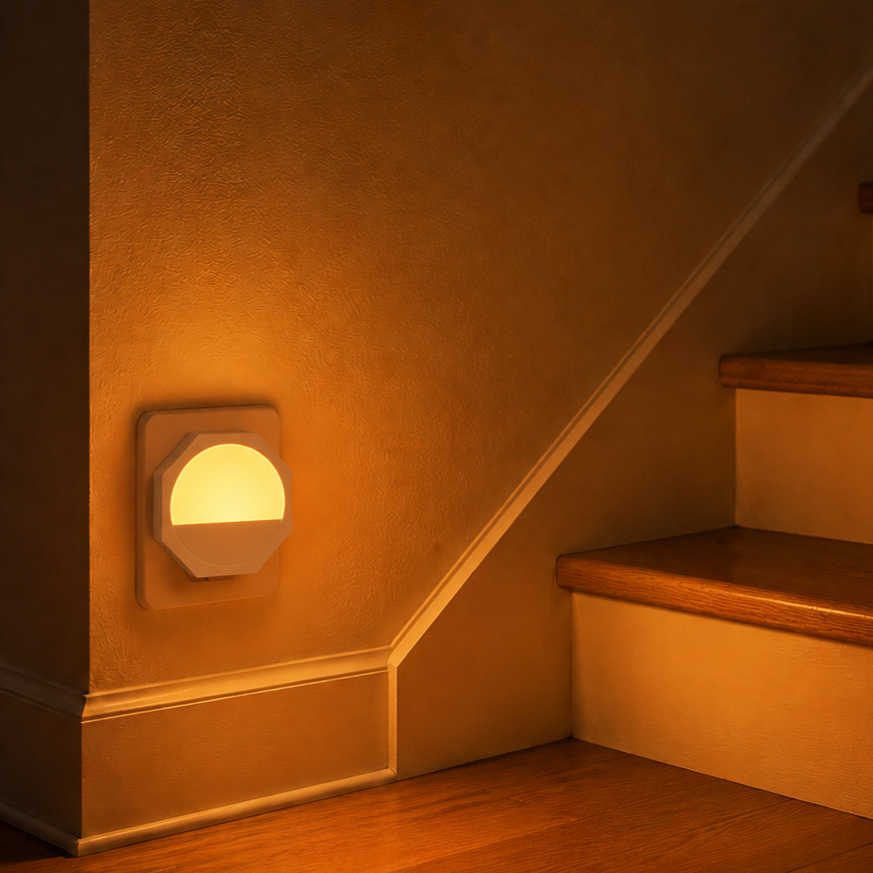
Where occasional illumination is preferred, motion activation may be a better fit.

Brightness control is particularly helpful because the ideal setting can vary depending on the size and layout of the hallway.
A practical nighttime route should be easy to follow without creating unnecessary glare or leaving dangerous areas underlit.
Evening lighting can also make everyday meals feel more enjoyable.
A dining area does not need a dramatic chandelier or an elaborate interior design scheme to feel welcoming.
Often, a warm light positioned above or beside the dining table is enough to create a comfortable atmosphere.
A pendant fixture or nearby shaded lamp can define the dining area as its own visual space.
Warm white lighting can make the surroundings feel inviting while still allowing food, tableware, and other details to be seen clearly.
Avoid placing exposed light sources directly within seated eye level.
If the dining space shares an open-plan layout with the living room, consider using a similar warm light appearance across both areas.
This creates a more consistent visual flow.
The kitchen is different from a decorative dining area.
Preparing food, using sharp utensils, and cleaning surfaces require appropriate task illumination.
Do not reduce kitchen lighting so far that these activities become difficult or unsafe.
Once the main cooking and cleaning activities are finished, you can switch back to softer lighting in the surrounding area.
This separation between practical task light and evening ambient light makes a home more adaptable.
Light color is one of the easiest ways to change the atmosphere of a room.
However, warmer is not automatically better for every activity.
Different color temperatures and light spectra create different visual experiences.
Warm white light around 2700K is widely used in residential lighting.
It produces a soft yellow-white appearance that works well in living rooms, dining spaces, and bedrooms.
If you are setting up evening lighting for the first time, warm white is a practical starting point.
Compared with conventional warm white light, 1600K amber lighting creates a noticeably deeper orange appearance.
It can be particularly attractive for bedside relaxation, decorative side tables, and low-level evening illumination.
Because it provides a more distinctive warm glow, it is often best used as part of a layered lighting setup rather than the only light source for every activity.
Red illumination, including narrowband options around 625–630nm, creates a very different visual atmosphere from ordinary white lighting.
At low brightness, it may be used for bedside accents or nighttime navigation.
However, red light changes how objects and colors appear, so it is not a universal replacement for general room lighting.
Neutral white light around 4000K is often useful for desk work, detailed tasks, and activities requiring clearer visual information.
It is generally less suited to creating a deeply warm evening atmosphere, but there is no need to eliminate it from the home.
The important thing is to use the appropriate light for the activity and time of day.
If you would like a more detailed comparison of color, brightness, dimming, and portable lighting features, read our guide to choosing the right nighttime lamp.
The atmosphere of a room depends on much more than the number of lamps.
A few thoughtful adjustments can often improve the result.
Use indirect light where possible. Allowing light to reflect off a wall or diffuse through a shade can soften the overall appearance and reduce harsh highlights.
Pay attention to reflective surfaces. Mirrors, glossy tabletops, and television screens may reflect exposed lamps. Adjust the position or angle of your light sources to reduce distracting reflections.
Match the lighting to your furniture layout. A sofa, reading chair, or bedside table naturally creates a location where a focused lamp can be useful.
Leave some areas darker. A cozy room does not need every wall and corner to receive the same amount of light. Gentle contrast can create depth and make illuminated areas feel more intentional.
Avoid unnecessary visual clutter. Too many lamps, decorative light strips, or competing light colors can make a space feel busy rather than relaxing.
Above all, prioritize comfort and usability over a perfectly staged appearance.
The best evening lighting setup should feel natural when you actually live in the room.
You do not need to redesign your entire home at once.
Start with one room and experiment with a few small changes.
Step 1: Turn off unnecessary overhead lighting.
Observe how the room looks with only its smaller lamps switched on.
Step 2: Choose one warm ambient light source.
Place it beside a sofa, near a wall, or on a side table where it creates a comfortable glow.
Step 3: Add focused lighting for activities.
If you are reading or working on something detailed, use a separate task light rather than making the whole room brighter.
Step 4: Adjust the brightness.
Reduce excessive glare, but keep enough light for the activity and safe movement.
Step 5: Review the room from where you actually sit.
A lamp that looks attractive from the doorway may feel too bright from the sofa or bed. Check the atmosphere at normal eye level and adjust accordingly.
These small changes can help you discover what works best for your home, without committing to a completely new lighting system.
A combination of warm ambient lighting, localized task lighting, and subtle accents is a good starting point. Warm white lamps around 2700K are versatile, while dimmer amber lighting can add a deeper evening atmosphere. Placement and glare control matter as much as the light color.
Try replacing bright overhead illumination with one or two dimmable bedside lamps. Use softer light, keep exposed light sources away from direct eye level, and avoid unnecessary brightness as bedtime approaches.
No. A comfortable evening environment can be created with well-positioned warm white lamps. Amber and red lighting are additional options for people who prefer deeper warm tones or specific low-light applications.
There is no fixed number. Begin with one soft ambient light and one task light in the area you use most. Add accent lighting only when it improves the atmosphere or serves a practical purpose.
A dark sleeping environment is generally preferable. If a night light is necessary for safety or convenience, use the lowest practical brightness and avoid shining the light directly toward the bed.
Cozy evening lighting is not about filling a room with decorative lamps or making everything as warm and dim as possible.
It is about choosing where light is needed, controlling how bright it feels, and creating a comfortable balance between illuminated and darker areas.
A gently lit living room can make an ordinary evening feel more inviting. A well-positioned reading lamp can turn a small chair into a favorite corner. A soft bedside light can make the transition from daytime activity to nighttime rest feel more natural.
And a carefully placed hallway light can make moving through the home after dark more convenient.
At YARRAE, we explore practical lighting solutions for different moments of everyday life, including warm amber illumination, red nighttime lighting, adjustable reading lamps, and portable ambient lights.
Our ranges of LED night lights, reading lights, and table lamps offer different approaches to creating comfortable residential lighting environments.
Whether you are refreshing a bedroom, decorating a living room, or planning lighting for an entire home, the most important starting point is simple:
Choose lighting that works with the way you live, and let the atmosphere develop naturally.
 Hot News
2026-10-12
2026-09-18
2026-09-08
2026-08-14
2026-07-25
2026-07-10
Shenzhen Yarrae Technology provides certified LED healthy lighting for global brands. 20+ years expertise, 15-month warranty, ≤1% defect rate, fast 15–20 day lead times. Trusted by BlockBluelight, Hooga & Bon Charge. Get a quote in 3 hours.
Bantian Street,Bulong Road, Hongshengyuan Building C, Third Floor,C304, Shenzhen, Guangdong, China
Copyright © 2026 Shenzhen Yarrae Technology Co., Ltd. Beijing All rights reserved. Privacy Policy

 EN